How The Latissimus Dorsi Muscle Affects Low Back Pain, Shoulder Pain, and The Golf Swing
The latissimus dorsi muscle is a big muscle connecting from the low back, across the thoracic spine, and into the back of the humerus bone (arm). When this muscle contracts, it pulls the arm down and behind you while also internally rotating it. On the other end, when the arm is stable, the lat muscle will pull the low back into extension. As you can see, when the muscle not lengthening properly or is firing too quickly than problems can occur just about anywhere. The low back can become irritated, the shoulder can become hurt or damaged, and the swing can suffer from over the top, early extension, and issues with sequencing. Let me break down how these properties are connected and how we can address the muscle for reduced pain and improved golf performance!
Understanding the lat muscle
The lat is a hinge muscle that create a lot of tension, stability, and powerful movement at the trunk and shoulder. It’s attachments at the lumbar spine and through the fasciae of the lower back have big implications on low back pain and mobility loss. Further, it’s attachment at the shoulder implicate it’s involvement in shoulder flexion and external rotation restrictions (think trail shoulder backswing position, the lat directly combats this). That being said, when this muscle is functioning properly, it can create powerful and efficient movement that helps us create massive club head speed.
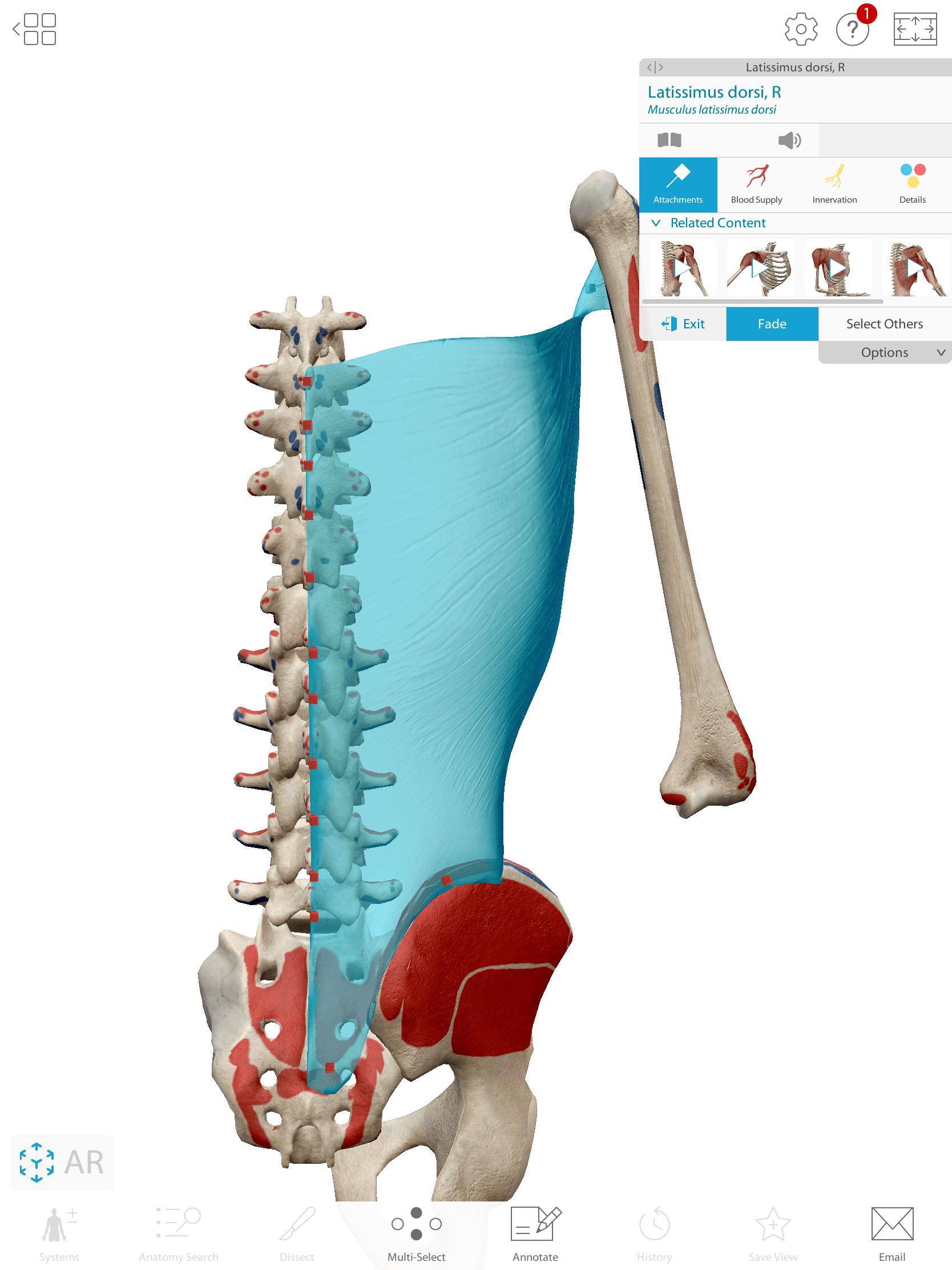
Latissimus Dorsi muscle from the back side.
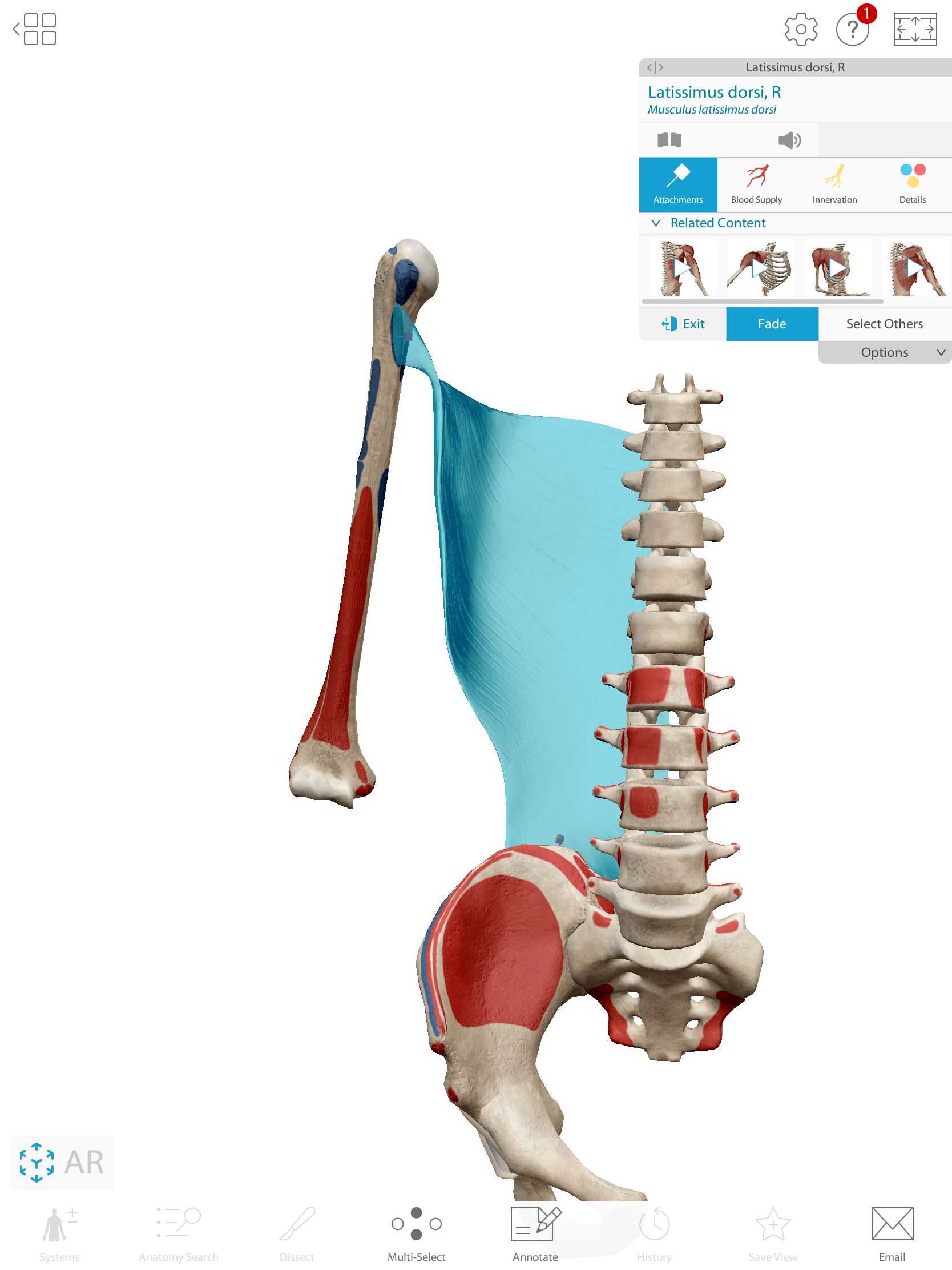
Lattisimus Dorsi muscle from the front, note the attchment at the shoulder
TPI’s Lat test
In TPI’s (Titleist Performance Institute) lat test, we assess for these components directly. Check out this video below…
The positioning of the test tells the story. The low back has to stay flat to the wall because arching or extending the back will put slack back into the lat muscle. The elbow has to stay straight because it will allow us to touch the wall without getting to full shoulder flexion, while shoulder flexion will tension the lat. By testing in this position, we force the lat to stretch and extend, testing to see if it can do so without compensation.
The lat muscle connected to low back and shoulder pain
If you suffer low back or shoulder pain, we can now see how the lat may be implicated. Tension through the lat arches and compresses the low back and pulls the shoulder into compression. Further, we restrict the shoulder through its normal flexion arc, creating the need for more tension at the shoulder OR a cheat at the low back. Arching the low back can get us more upright, letting us get away with missing shoulder flexion while still balancing the weight over our center of mass (fake shoulder flexion). Now the low back is experiencing greater loads in extension and compression because the shoulder is missing flexion range of motion.
The lat muscles implications on golf performance
As I mentioned earlier, the lat muscle will produce internal rotation and extension (shoulder going behind us). If we think about the backswing, the trail shoulder needs to flex and move through external rotation. This means we need the lat muscle to “allow” us to get into a complete backswing position. If there is tightness here, it will influence a restricted backswing at the shoulder. This can include standing up or loss of posture as we start to search for other joints to create rotation from, flat shoulder plane, and excessive over-the-top mechanics. As the lat muscle restricts external rotation, it will create a shoulder position primed and ready for hiking and early forward drive creating excessive over the top patterning.
From the lat’s attachment at the low back, excessive tightness and restriction can create a standing S posture position, or excessive arching of the low back, creating an environment of compressed vertebrae limited from rotation. This will lead to searching for mobility and influence movements like early extension, loss of posture, and hip hiking.
How to address problems with the lat muscle
Addressing one muscle is never the long-term solution. The lat muscle is attached at multiple joints form the pelvis to the shoulder. With that in mind, it is sometimes the underlying joints that are the source of the restriction. Even the nervous system can play a role in why we may fail the lat test for one reason or another. That being said, I have included a few movements here that would start the process of addressing a tissue extensibility problem at the lat, a nervous system restriction, and both a lumbar spine and shoulder joint restriction problems.
1. Respiratory lat stretch
Here we are addressing how the rib cage plays a role in shoulder joint mobility and lat length.
2. DNS crowbar
This movement is fantastic for addressing and improving shoulder complex stability, lat muscle activation, and controlling the shoulder through external rotation.
3. Heavy banded sit up
This drill helps create flexion through the lumbar spine again, the position opposite of what a tight lat muscle would encourage. Working through lumbar flexion helps address and lumbar spine restrictions to this motion and forces the lat to lengthen and allow lumbar flexiona gain.
4. Wall supported shoulder press with banded external rotation
This position puts all the pieces together. We are doing this in our lat test testing position to force the lat to cooperate while teaching the shoulder complex to create stability though this range of motion.
Conclusion
The latissimus dorsi is one of the most influential muscles connecting the shoulder, trunk, and pelvis, making it a critical link between pain and performance. When the lat loses its ability to lengthen, coordinate, or stabilize properly, the effects can be felt throughout the body—from increased stress on the low back and shoulder to compensations that negatively impact the golf swing. While a failed lat test may appear to be a simple flexibility issue, the underlying cause is often more complex and can involve the shoulder joint, thoracic spine, rib cage mechanics, lumbar spine mobility, or even nervous system control.
For golfers, restoring proper lat function can improve backswing mechanics, enhance shoulder mobility, reduce compensations such as early extension and over-the-top movement patterns, and ultimately create a more efficient and powerful swing. The key is not simply stretching the muscle, but understanding why the restriction exists and addressing the entire movement system. By combining targeted mobility work, stability training, and a comprehensive physical assessment, golfers can reduce pain, improve movement quality, and unlock performance gains that translate directly to the course.
-Dr. Nick DC, MS, TPI, CSCS
If you would like to learn more about your body, pain, and performance, send Dr. Nick an email at contact@integratedrpc.com or call at (585)478-4379, or schedule a FREE discovery visit at Contact.
Instagram @Integrated.Rehab.Performance