Reverse Spine Angle In The Golf Swing
Reverse spine angle has been found to be associated with low back pain in golfers. There are examples of golfers who create a reverse spine angle and have fantastic success, but others who have been crippled with debilitating pain and injury. The majority of great golfers avoid this position, so what is it and how is it associated with low back pain?
Reverse spine angle
Reverse spine angle happens at the top of the backswing position. If we look at a golfer with reverse spine angle from face on, we will see that their head points more towards the target then it does away from the target. Getting to this position from a foreword hinge at address means that we have rotated and extended TOO MUCH into the backswing. What we would prefer is that we see extension from the spine in the backswing to a minimal degree, before the head starts to point back towards the target.
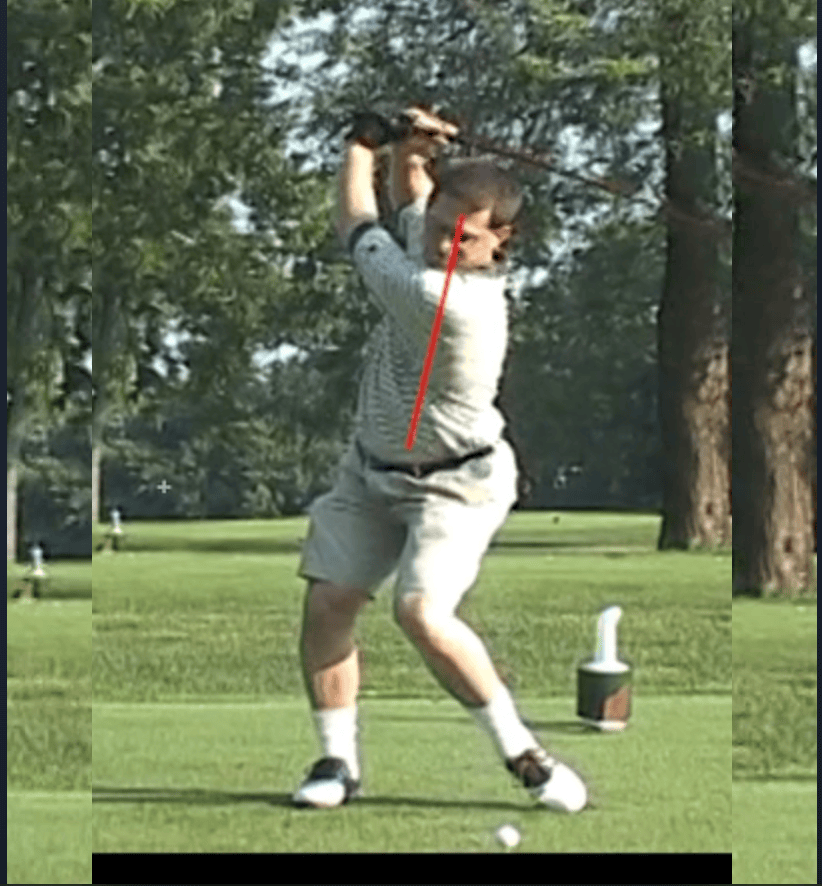
Reverse spine angle in the golf swing. The angle of the torso points towards the target.
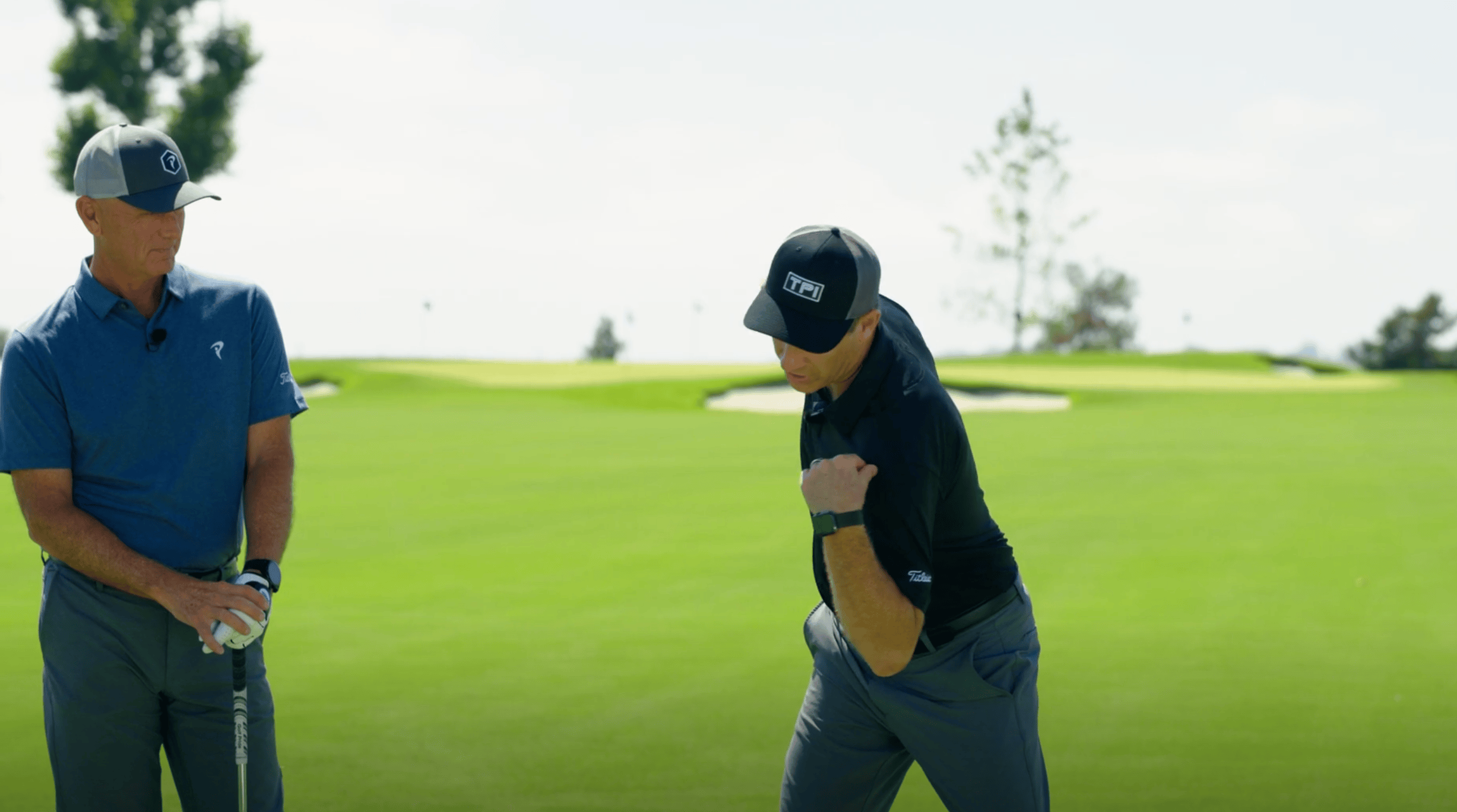
Backwards tilt of the torso in the backswing, no reverse spine angle.
In the reverse spine angle position, the vertebrae are being extended and rotated while in the preferred position they are staying more neutral to slightly extended. The real problem occurs then in the downswing. Now, the reverse spine angle golfer will drive from an excessive extension position hard and fast into a flexed position at impact.
That being said, if we have a big and excessive rotation in the backswing, the reverse spine angle position will appear inevitably. This is because the movement of spinal rotation is coupled with spinal extension. That is, these joints at the vertebrae responsible for creating rotation will also create extension simultaneously to create the space for more rotation. For this reason, reverse spine angle is sometimes strategically used in long drive athletes looking to increase their turn since extension is locked in step with rotation.
Check out this article for more on what the spine does in the golf swing…
-What does the spine do in the golf swing?
The problem with reverse spine angle
The issue here is that the vertebrae are begin placed in a position of excessive compression when we hyper-extend far enough that we see reverse spine angle. The compression from this position changes to open and flexed joints before slamming back down into compression just after impact and in the follow through. This excessive motion leads to added forces and compression during that follow through.
Why do we see golfers getting into reverse spine angle?
First, missing spinal rotation mobility. Like we mentioned, extension is coupled with rotation at these joints, and we can attempt to make rotation easier if we extend more and more. Further, golfers missing control over the pelvis may set up and turn in excessive anterior tilt. The excessive tilt will set the stage for compensatory extension at the vertebrae above it. This is directly related back to glute and core control over the pelvis orientation. Last, missing hip mobility will prevent turn from the lower half, influencing excessive turn from the spine and again asking for more extension to work with the increased rotation demand.
Improving and addressing reverse spine angle
To help prevent and stop the reverse spine angle swing characteristic it is exceptionally helpful to see a golf professional for instruction. But, when physical limitations like the one listed above are responsible for this patter, we need to address these first. Follow along the movement below to help address thoracic spine mobility, pelvic mobility and motor control, and hip mobility to prevent the need for reverse spine angle in the golf swing…
1. Thoracic spine mobility
-FRC thoracic CAR
-FRC PAILS and RAILS
-Split squat med ball slam
Check out this article for more on spinal mobility…
-4 moves to improve spinal mobility in the golf swing
2. Pelvic motor control
-Soleus bridge
-Wall assisted dead bug
-Banded knees to center
Check out this article for more on pelvic motor control for golfers…
-The abduct and shift drill for golfers
3. Hip mobility
-Hip 90/90 swivels
-Anterior glute medius rotate and hold
-Into hip kettlebell swing
Check out this article for more on hip mobility for golfers…
-The most common problems for Nashville golfers
Conclusion
Reverse spine angle is more than just a swing characteristic—it is often a sign that the body is borrowing motion from the wrong places. While some elite golfers and long drive competitors can successfully create this position, they typically have the strength, mobility, and motor control to tolerate the increased stresses it places on the spine. For most golfers, however, reverse spine angle increases compressive forces on the lumbar spine and can contribute to recurring low back pain while also making consistent ball striking more difficult.
Rather than simply trying to eliminate reverse spine angle with swing thoughts alone, it is important to understand why it is occurring. Restrictions in thoracic spine mobility, limited hip mobility, and poor control of pelvic position are some of the most common physical limitations that force golfers into this compensation. Addressing these movement deficits allows the body to create a full backswing without relying on excessive spinal extension.
If you struggle with low back pain or notice a reverse spine angle in your swing, combining golf instruction with a comprehensive physical assessment is often the most effective solution. By improving how your body moves first, you can build a more efficient golf swing that not only reduces stress on your spine but also creates more consistent, powerful, and repeatable golf shots.
-Dr. Nick DC, MS, TPI, CSCS
If you would like to learn more about your body, pain, and performance, send Dr. Nick an email at contact@integratedrpc.com or call at (585)478-4379, or schedule a FREE discovery visit at Contact.
Instagram @Integrated.Rehab.Performance